
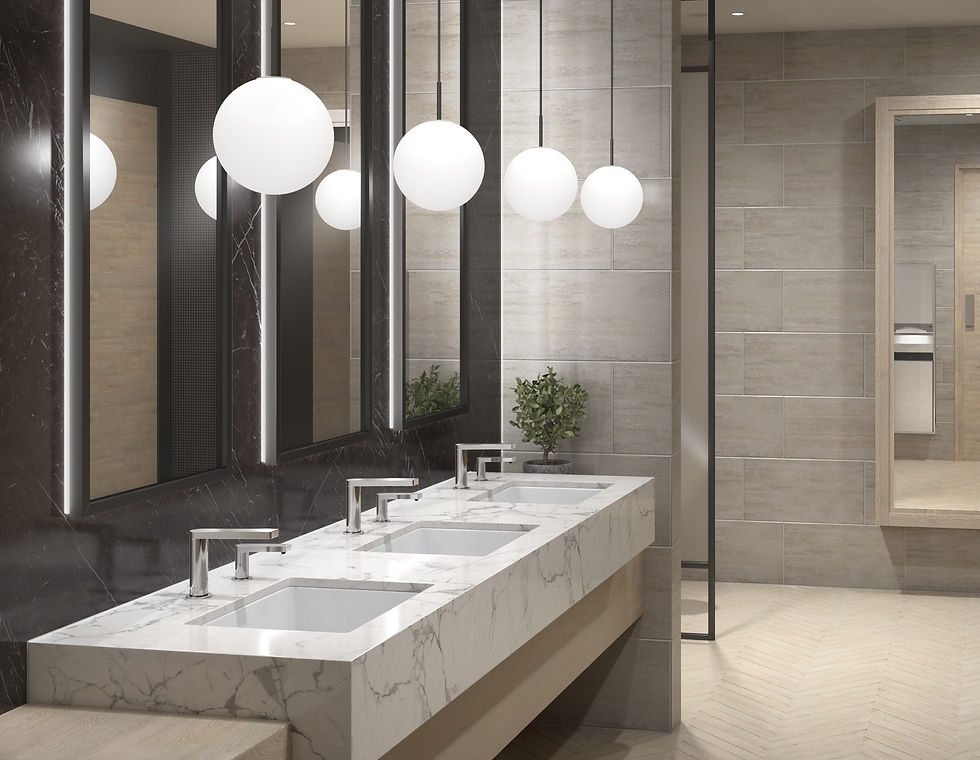
Grand Rapids Construction provides commercial bathroom remodels for offices, medical facilities, retail spaces, and industrial buildings across Grand Rapids and West Michigan. We deliver durable, code-compliant restroom renovations with clear planning, minimal disruption, and professional project management.

Grand Rapids Construction provides professional drywall hanging and finishing for dental office build-outs and renovations across Grand Rapids and West Michigan. We deliver clean, code-compliant results with minimal disruption, supporting efficient timelines and a polished clinical environment.

Locker Room Remodel & Facility Improvements Renovated locker room space with improved layout, finishes, and long-term performance.
Grand Rapids Construction provides commercial bathroom remodels for offices, medical facilities, retail spaces, and industrial buildings across Grand Rapids and West Michigan. We deliver durable, code-compliant restroom renovations with clear planning, minimal disruption, and professional project management.


Grand Rapids Construction is a Google Guaranteed contractor, meaning our business has completed Google’s background checks and verification process. For commercial and industrial clients, the Google Guaranteed badge provides added confidence that you’re working with a qualified, accountable contractor—especially for complex facility projects, upgrades, and time-sensitive repairs. It’s an additional layer of trust that helps business owners, property managers, and facilities teams reduce risk when selecting a construction partner.
Our Commercial Construction Process

Our Commercial Construction Process
Complex commercial and industrial construction projects require more than skilled trades — they demand structure, coordination, and disciplined execution. In warehouses, manufacturing facilities, distribution centers, and multi-tenant industrial buildings throughout Grand Rapids and West Michigan, construction decisions affect operational continuity, regulatory compliance, insurance exposure, and long-term asset performance. Without a defined process, even well-intentioned projects can create unnecessary risk, cost overruns, and disruption.
The Process Built To Simplify Construction
Grand Rapids Construction has developed a structured commercial construction process designed specifically for facility owners, property managers, developers, and operations leaders responsible for active commercial environments. Our approach aligns engineering coordination, budget modeling, permitting oversight, safety planning, and phased execution into a clear framework that protects production schedules and capital investments. This process matters most for organizations that value predictability, accountability, and long-term performance — not just project completion.
Preliminary Assessment

Phase 1: Preliminary Assessment
The Preliminary Assessment phase is a structured, high-level evaluation designed to identify visible risk factors, compliance triggers, and operational constraints before formal pre-construction begins. This is not a substitute for full engineering design, sealed plans, or detailed pre-construction services. Instead, it provides a disciplined “bird’s-eye view” of the facility to determine whether deeper technical analysis, engineering coordination, or permitting review will be required.
Looking for Stress Points in a Project
During this stage, Grand Rapids Construction evaluates key elements such as roofing systems, building envelope conditions, visible structural indicators, drainage performance, life safety impacts, and operational considerations within active commercial and industrial environments across Grand Rapids and West Michigan. The objective is to surface potential concerns early — minimizing surprises and ensuring that subsequent engineering and budgeting efforts are aligned with actual field conditions.
When appropriate, this phase transitions into full pre-construction services, including engineering coordination, sealed plan development, cost modeling, and permitting strategy. By clearly distinguishing Preliminary Assessment from formal pre-construction, we provide clients with transparency, clarity, and a disciplined pathway forward.
Engineering & Scope Development

Phase 2: Engineering & Scope Development
Once the Preliminary Assessment identifies potential risks, constraints, and compliance triggers, the project advances into Engineering & Scope Development. This phase transforms high-level findings into technically sound, buildable solutions. It is where assumptions are validated, engineering coordination begins, and the full impact of proposed work is defined.
During this stage, Grand Rapids Construction coordinates with licensed engineers, specialty designers, and manufacturer technical representatives when required. Depending on project scope, this may include structural load review, roof assembly design, fire suppression modification planning, life safety impact analysis, hydraulic calculations, drainage redesign, or building envelope detailing. When sealed plans are required under Michigan code, we coordinate stamped drawings to ensure permit readiness and inspection compliance before execution begins.
Scope Development also clarifies materials, fastening patterns, flashing details, insulation specifications, penetration treatments, and integration with existing mechanical or life safety systems. This disciplined documentation reduces change orders, prevents warranty conflicts, and protects against inspection delays. For commercial and industrial facilities in Grand Rapids and throughout West Michigan, this phase ensures that execution planning is grounded in verified technical detail — not field improvisation.
By the end of Phase 2, the project has a clearly defined technical scope, coordinated engineering documentation (when required), and a foundation ready for budget alignment and permitting strategy.
Budget Modeling & Capital Alignment

Phase 3: Budget Modeling & Capital Alignment
Once engineering and scope development are complete, the project advances into Budget Modeling & Capital Alignment. This phase translates technical scope into structured financial clarity. For commercial and industrial facilities in Grand Rapids and throughout West Michigan, construction decisions often require capital approval, board review, insurance coordination, or operational budgeting alignment. Accurate financial modeling at this stage protects decision-makers from unforeseen cost escalation and scope ambiguity.
Grand Rapids Construction develops detailed cost frameworks based on verified scope documentation, material specifications, sequencing strategy, and procurement timelines. When appropriate, we present phased execution models, repair-versus-replacement comparisons, restoration alternatives, and long-term lifecycle considerations. This allows ownership groups, facility managers, and operations leaders to evaluate capital allocation options with confidence — not assumptions.
Budget Modeling also accounts for operational impact, weather exposure risk, lead-time procurement, and potential contingency factors identified during engineering review. By aligning scope, engineering documentation, and financial planning before permit submission or mobilization, we reduce change orders, protect approval timelines, and create predictability in capital deployment.
For organizations navigating roofing replacements, fire suppression upgrades, life safety modifications, or building envelope improvements, this phase ensures that financial strategy supports technical reality — and that execution can proceed without reactive budget adjustments.
Permitting & Compliance

Phase 4: Permitting & Compliance
With engineering documentation and budget alignment established, the project advances into Permitting & Compliance. This phase formalizes the project with the appropriate Authorities Having Jurisdiction (AHJ), including local building departments, fire marshals, and inspection agencies throughout Grand Rapids, Kent County, and surrounding West Michigan municipalities.
Grand Rapids Construction coordinates permit submissions, sealed plan packages, supporting calculations, manufacturer documentation, and required code references to ensure applications are complete and inspection-ready. Whether the project involves commercial roof replacement, fire suppression modification, life safety upgrades, structural adjustments, or occupancy-related changes, we identify required approvals early and manage the submission process with discipline.
During plan review, we respond to comments, coordinate revisions when required, and maintain alignment between engineered scope and field execution. This proactive approach reduces inspection delays, prevents compliance conflicts, and protects project timelines. For industrial facilities and warehouse environments, where fire protection, high-piled storage regulations, and operational safety standards may apply, this phase ensures that regulatory obligations are addressed before mobilization begins.
By the end of Phase 4, permits are secured, inspection requirements are defined, and the project is formally authorized to proceed into execution with regulatory clarity and reduced compliance risk.
Execution Planning & Mobilization

Phase 5: Execution Planning & Mobilization
With permits secured and compliance requirements clearly defined, the project advances into Execution Planning & Mobilization. This phase prepares the jobsite, team, materials, and sequencing strategy to ensure construction proceeds safely, efficiently, and with minimal disruption to active operations.
Grand Rapids Construction develops a detailed execution plan tailored to each commercial or industrial facility in Grand Rapids and throughout West Michigan. This includes material procurement scheduling, equipment staging logistics, safety planning, access control, weather mitigation strategy, and phasing coordination aligned with operational schedules. For warehouses, manufacturing plants, and distribution centers, this step is critical to protect production flow, tenant occupancy, and asset integrity.
During this phase, we finalize site-specific safety protocols, fall protection systems, lift plans, and equipment coordination. Interior protection measures, temporary dry-in procedures, and controlled work zones are established before full-scale construction begins. By addressing these factors prior to mobilization, we reduce exposure to weather risk, safety incidents, and operational disruption.
Execution Planning ensures that when crews arrive onsite, every component — materials, sequencing, safety, documentation, and communication — is aligned. This disciplined preparation separates reactive construction from structured commercial project delivery.
Active Facility Execution

Phase 6: Active Facility Execution
With planning complete and mobilization established, the project moves into Active Facility Execution — the phase where construction occurs within live commercial and industrial environments. For warehouses, manufacturing plants, distribution centers, medical facilities, and multi-tenant commercial properties in Grand Rapids and throughout West Michigan, this stage demands disciplined coordination to protect ongoing operations.
Grand Rapids Construction executes projects using phased sequencing strategies designed to minimize disruption to production schedules, logistics flow, tenant occupancy, and employee safety. Work zones are clearly defined, access is controlled, interior protection measures remain in place, and daily coordination ensures facility leadership is informed of progress and upcoming activities. Whether performing commercial roof replacement, fire suppression modification, life safety upgrades, or structural improvements, execution remains aligned with the previously engineered scope and approved permit documentation.
Throughout this phase, safety oversight, quality control checks, and real-time problem resolution are actively managed. If unforeseen conditions arise — such as concealed moisture damage, structural anomalies, or code-driven adjustments — findings are documented and communicated immediately with clear resolution pathways. This structured field execution approach reduces reactive decision-making and protects operational continuity.
Active Facility Execution is where preparation proves its value. Because engineering, budgeting, compliance, and mobilization were completed with discipline, field execution proceeds with predictability, accountability, and controlled risk exposure.
Inspection, Verification & Closeout

Phase 7: Inspection, Verification & Closeout
As construction nears completion, the project enters the Inspection, Verification & Closeout phase. This stage ensures that all work meets engineered specifications, permit conditions, manufacturer standards, and applicable building and fire codes before final acceptance.
Grand Rapids Construction coordinates both rough inspections and final inspections as required by the Authority Having Jurisdiction (AHJ). Rough inspections typically occur prior to concealment of work — such as structural modifications, fire suppression piping, mechanical penetrations, or framing assemblies — allowing inspectors to verify compliance before systems are enclosed. Final inspections occur once all work is completed, confirming that installations meet approved plans, code requirements, and operational safety standards.
For roofing systems, manufacturer technical representatives conduct independent field inspections to verify membrane installation, flashing details, fastening patterns, and edge metal performance. This inspection is essential to secure full manufacturer-backed warranty coverage — not limited or prorated protection. For life safety and fire suppression projects, inspection approval confirms that systems are tested, documented, and ready for operational use.
During closeout, we deliver a comprehensive documentation package including inspection approvals, approved permit records, warranty certificates, maintenance guidelines, and photographic documentation. This ensures facility owners and operations leaders in Grand Rapids and throughout West Michigan retain defensible records for insurance, compliance, and long-term asset management.
Inspection & Closeout formally transitions the project from construction activity to protected asset performance.
Inspection, Verification & Closeout

Phase 8: Post-Project Asset Support & Lifecycle Management
Construction does not end at final inspection. For commercial and industrial facilities in Grand Rapids and throughout West Michigan, long-term asset performance depends on proactive monitoring, maintenance planning, and warranty protection. Phase 8 ensures that completed work transitions from project status into managed, protected infrastructure.
Grand Rapids Construction provides structured post-project support designed to preserve manufacturer warranties, extend service life, and reduce unexpected capital exposure. This may include scheduled roof inspections, preventative maintenance programs, documentation retention, system performance reviews, and coordination of minor adjustments identified after occupancy or operational restart. For roofing systems, periodic inspections help maintain full warranty eligibility. For fire suppression and life safety systems, ongoing documentation and compliance tracking reduce inspection risk and regulatory exposure.
We also assist ownership groups and facility managers with long-term capital forecasting, helping identify future repair windows, phased upgrades, or replacement planning well before systems approach end-of-life. By maintaining visibility beyond construction, we support operational continuity and strategic budgeting decisions. Post-Project Asset Support reflects our commitment to partnership — ensuring that the investment made during construction continues to perform reliably for years to come.
Commercial Construction Process FAQ
FAQ: Our Commercial Construction Process
Why does a structured construction process matter for commercial facilities?
Commercial and industrial projects impact more than physical space — they affect operations, compliance exposure, insurance position, and capital deployment. A defined process reduces risk, prevents scope gaps, improves budget accuracy, and ensures regulatory alignment before execution begins. Without structure, construction becomes reactive rather than strategic.
How does this process reduce financial risk?
By separating Preliminary Assessment, Engineering Coordination, Budget Modeling, and Permitting into defined phases, we eliminate assumptions before capital is committed. Scope is validated technically before budgets are finalized, reducing change orders and protecting approval timelines.
When should leadership engage a contractor in this process?
Early engagement produces better outcomes. Involving a commercial contractor during Preliminary Assessment allows risks, compliance triggers, and operational impacts to be identified before design commitments or capital approvals occur.
What is the difference between Preliminary Assessment and Preconstruction?
Preliminary Assessment is a high-level evaluation identifying visible risks and potential compliance triggers. Preconstruction begins when engineering coordination, detailed scope documentation, and cost modeling formally commence. Separating these phases ensures clarity and protects against premature assumptions.
How are engineering risks managed during the process?
Engineering & Scope Development verifies structural requirements, system integration, code triggers, and sealed plan requirements before field mobilization. Early validation prevents costly redesign during construction.
How does this process protect operational continuity?
Execution Planning and Active Facility Coordination phases align construction sequencing with production schedules, tenant operations, and logistics flow. Controlled work zones, phased staging, and communication protocols reduce disruption.
How are building departments and fire marshals incorporated?
Code triggers are identified during engineering coordination. Formal permit submission, review responses, and inspection scheduling occur during the Permitting & Compliance phase. This ensures regulatory clarity before mobilization.
How does this process reduce inspection delays?
By preparing sealed plans, documentation packages, and compliance alignment prior to submission, plan review comments are minimized and addressed proactively. Rough and final inspections are scheduled strategically to prevent schedule bottlenecks.
How are unforeseen field conditions handled?
Unexpected findings are documented immediately and reviewed against engineered scope. Resolution options are presented clearly with cost and schedule implications before corrective action proceeds.
How does this framework protect warranties?
Manufacturer installation standards are incorporated during Engineering & Scope Development. Independent manufacturer inspections during Closeout confirm compliance, securing full warranty coverage rather than limited protection.
Does this process support insurance coordination?
Yes. Early documentation, scope clarity, and compliance alignment support storm-related claims, life safety upgrades, and insurance-required modifications.
How does this process help with capital approval?
Budget Modeling & Capital Alignment provides option-based financial scenarios — repair versus replacement, phased implementation, and lifecycle considerations — enabling leadership to make informed capital allocation decisions.
What role does safety play throughout the process?
Safety planning begins during Execution Planning and continues throughout Active Facility Execution. Fall protection systems, controlled access, and OSHA-compliant protocols protect both personnel and liability exposure.
How is accountability maintained?
Each phase includes defined deliverables — assessment documentation, engineered scope confirmation, budget frameworks, permit approvals, inspection records, and closeout packages. This ensures transparency and structured accountability.
How does this process improve predictability?
By addressing engineering, compliance, financial alignment, and mobilization before field execution, uncertainty is reduced. Predictability improves schedule confidence, cost control, and operational protection.
Is this process scalable for large industrial facilities?
Yes. The phased framework is specifically designed for warehouses, manufacturing plants, logistics hubs, and multi-tenant industrial buildings throughout Grand Rapids and West Michigan.
How does this process support long-term asset management?
Post-Project Asset Support ensures warranties are preserved, maintenance schedules are implemented, and lifecycle planning continues beyond project completion.
What differentiates this approach from traditional contractors?
Many contractors move directly from estimating to construction. Our framework separates risk identification, engineering validation, financial modeling, permitting, execution planning, and closeout into defined stages — reducing reactive decision-making.
How does this process protect leadership from compliance exposure?
Formal coordination with building officials, fire marshals, and manufacturers ensures that installations meet approved plans and code requirements. Documentation delivered at closeout provides defensible records.
Why does this process matter for organizations operating in West Michigan?
Grand Rapids and surrounding municipalities require compliance with Michigan building code, fire code, and local permitting procedures. Weather conditions, snow loads, and freeze-thaw cycles also impact roofing and structural planning. A disciplined process ensures regional factors are accounted for before construction begins.
This structured commercial construction process reflects Grand Rapids Construction’s commitment to disciplined execution, regulatory alignment, financial clarity, and long-term asset protection for commercial and industrial facilities throughout West Michigan.